


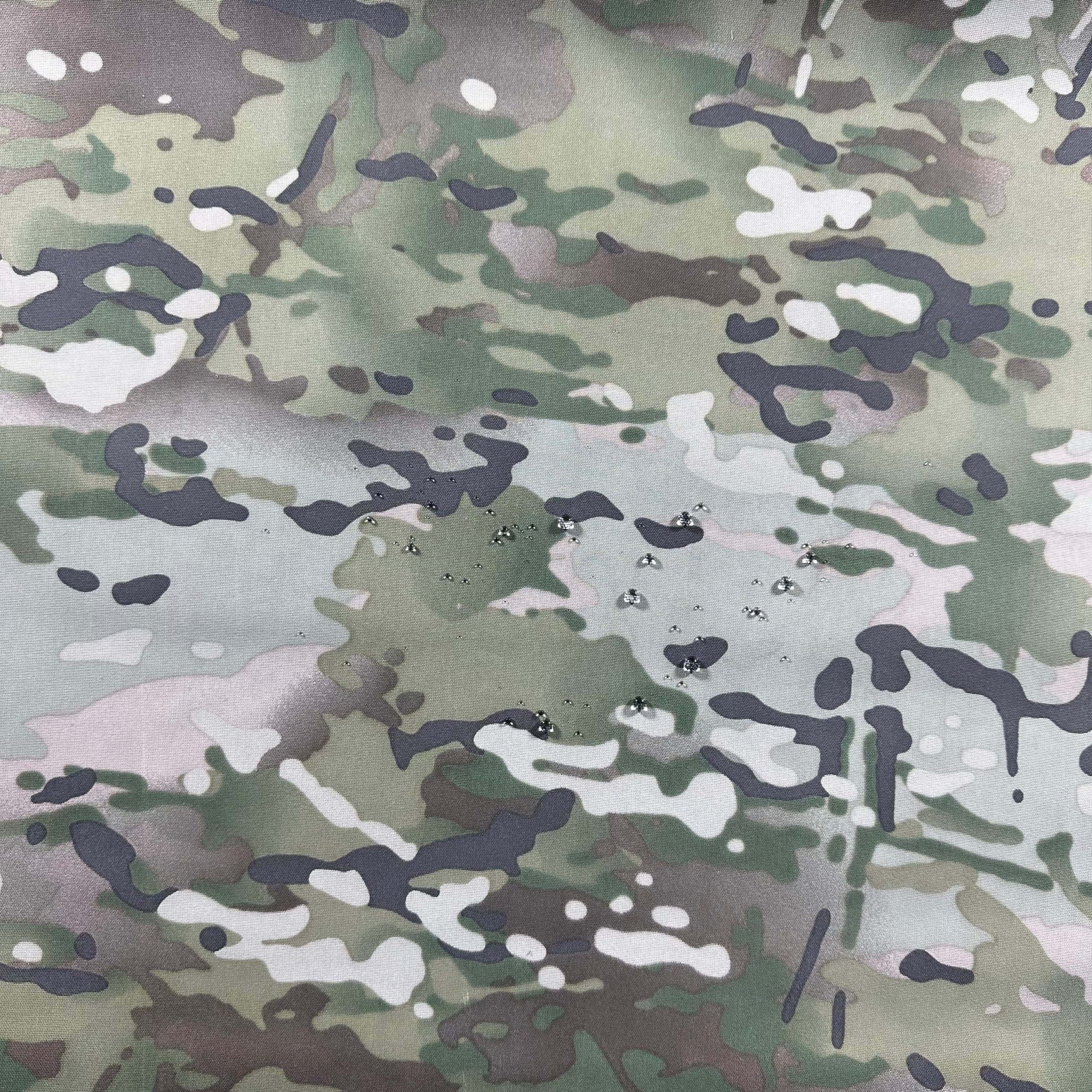
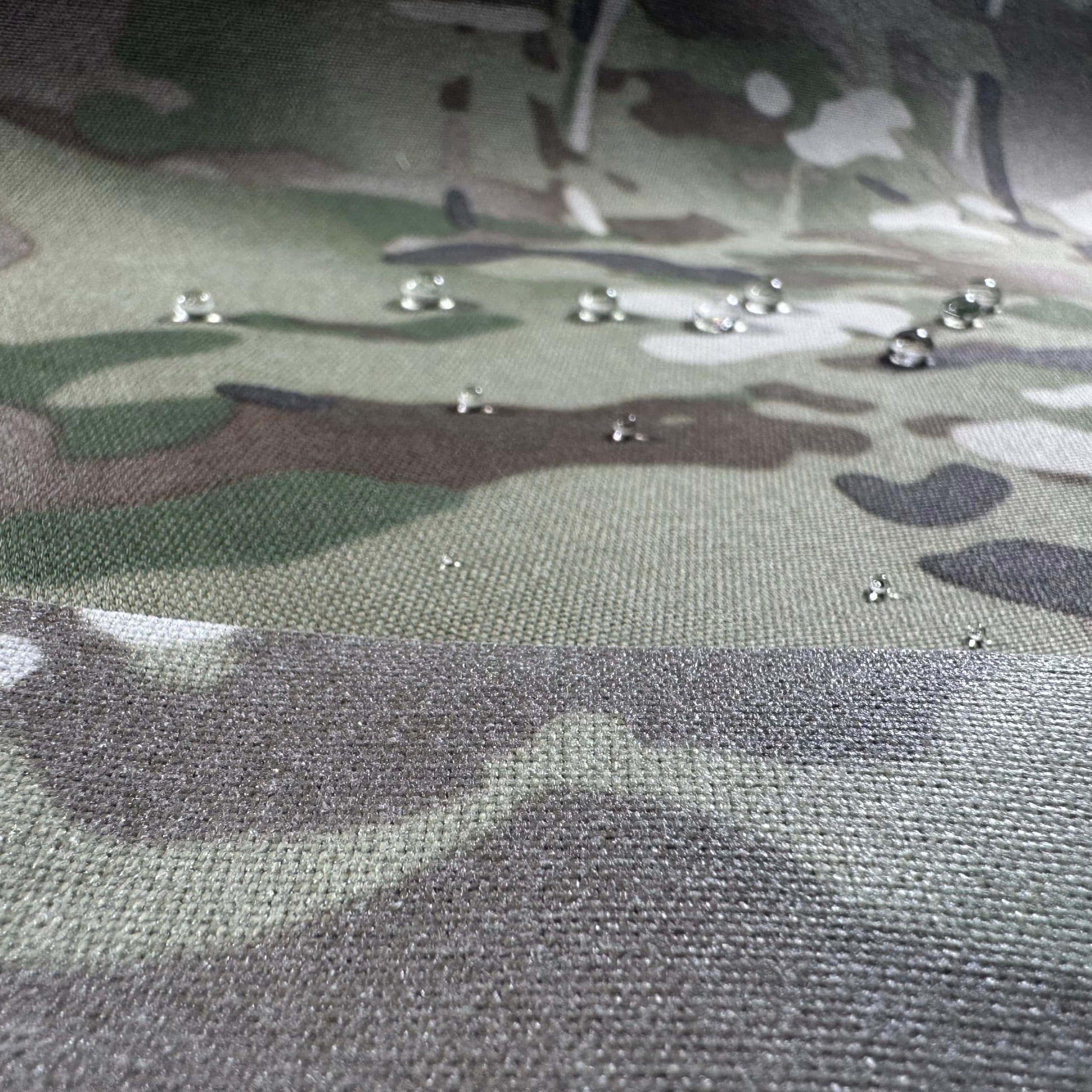
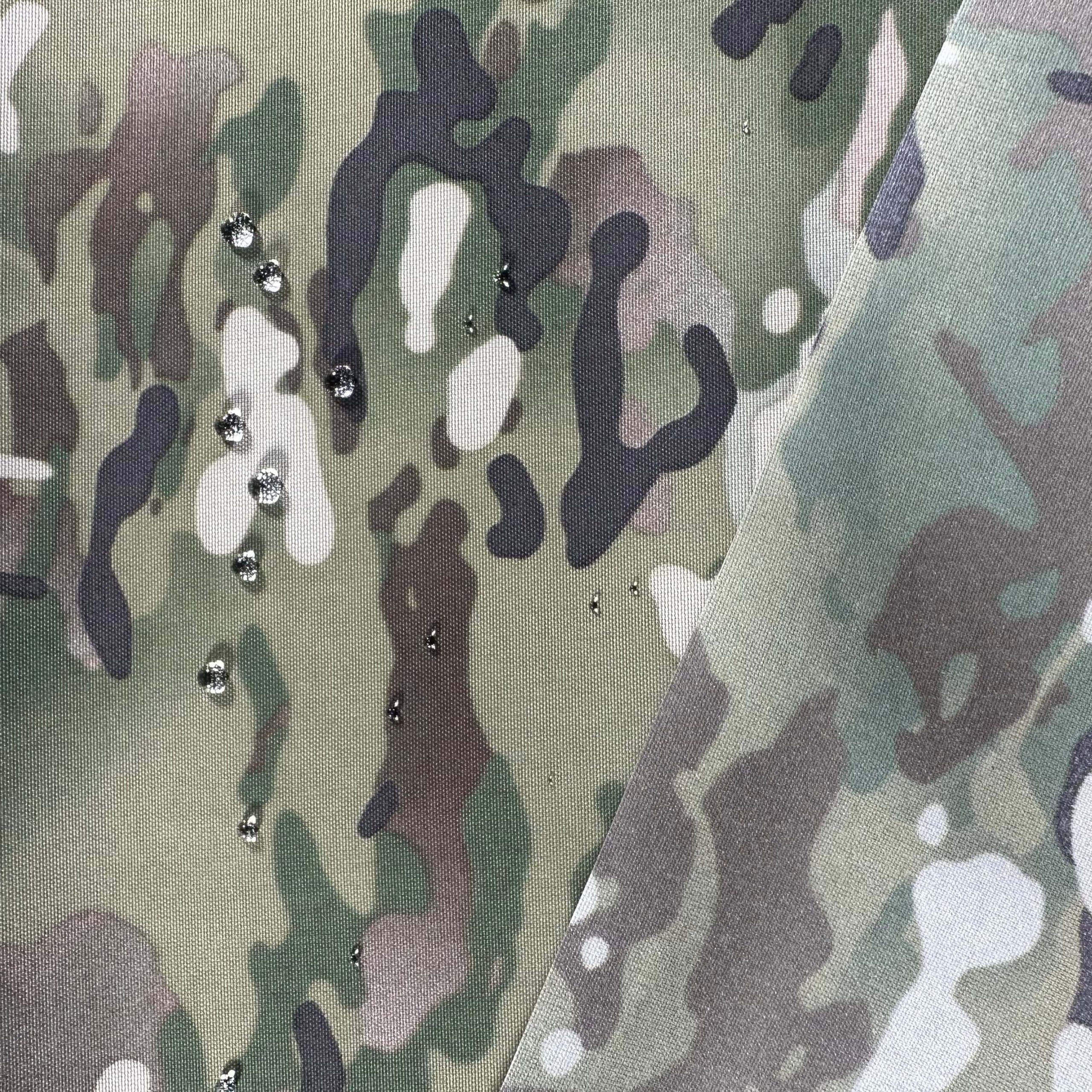
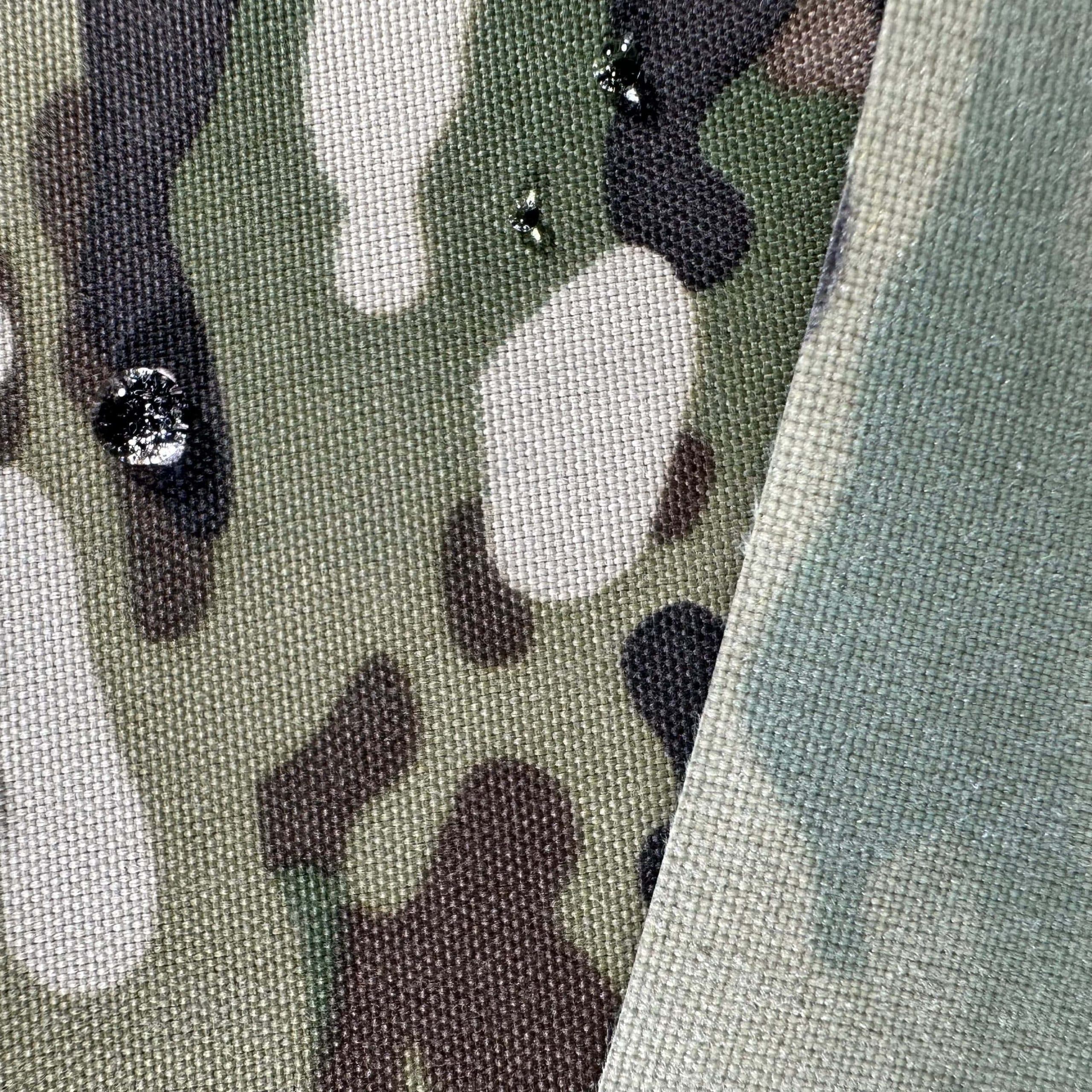
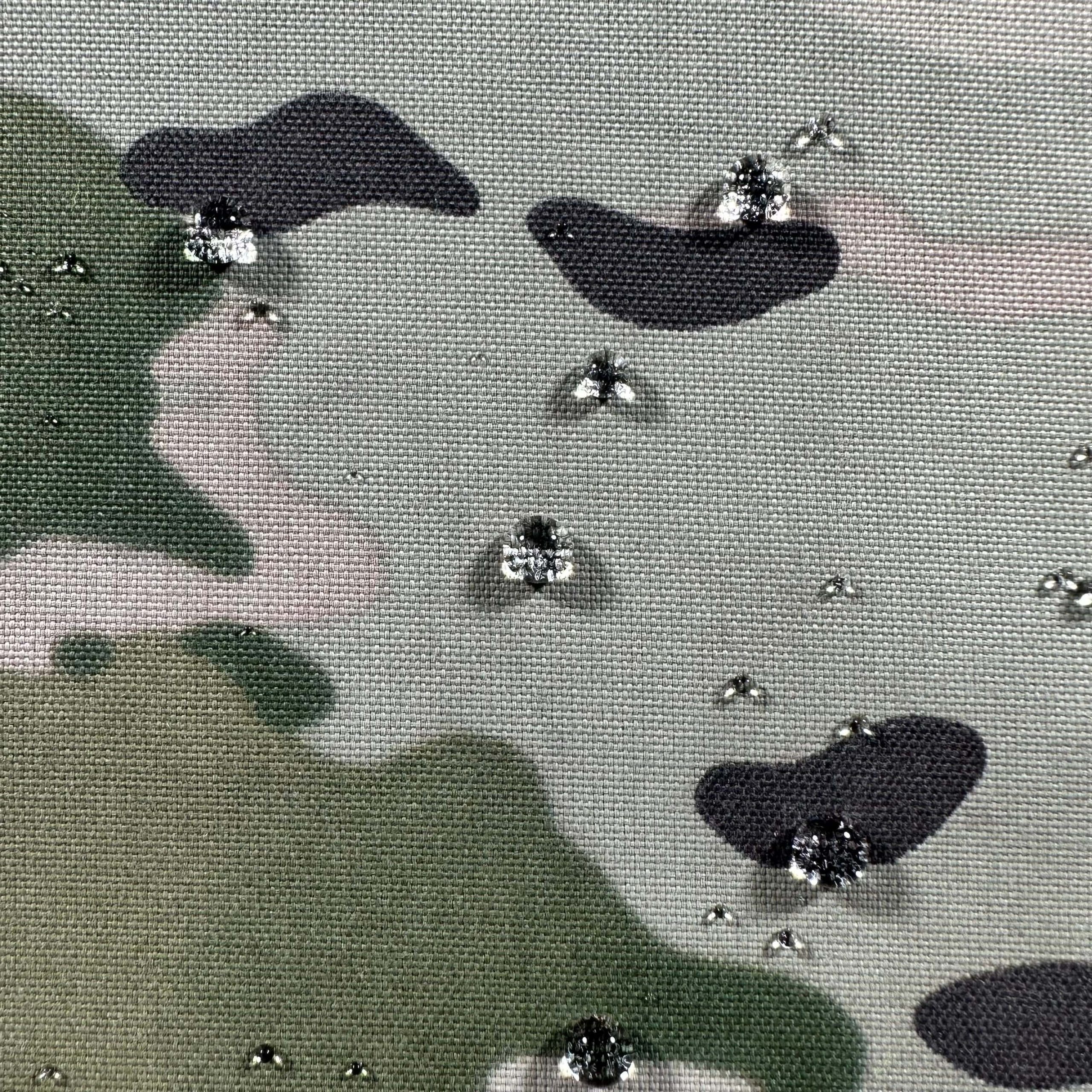
Nylon 330D Cordura Style Fabric Multicam Camo IRR Finishing Waterproof Pu Coating
This Nylon 330D Cordura-style fabric is a make-to-order tactical textile built for buyers who need the Multicam camouflage look, IRR/NIR signature control, and a waterproof PU-coated backside—without jumping to heavier 500D/1000D constructions. It uses 100% nylon 330D×330D, a 25×16 woven structure, and a finishing package combining Multicam camouflage + IRR + waterproof PU coating.
Inquiry- Description
-
Product Introduction
When tactical gear brands source “Multicam IRR fabric,” they’re usually trying to solve three real procurement problems at once:
-
Visual camouflage consistency (the pattern needs to look right across lots and reorders)
-
Near-infrared behavior (so the gear doesn’t appear unnaturally bright under NIR observation)
-
Weather and abrasion reality (packs and pouches get dragged, scraped, and exposed to rain)
This fabric platform is designed for that combination. The 330D Cordura-type Oxford base provides a strong strength-to-weight balance, the PU coating adds a reliable barrier and structure for bags/gear, and the IRR finishing is intended to help control NIR reflectance so the print behaves more like its environment under IR/NIR observation.
Key Specifications
These are the exact purchasing fields from the referenced product page:
Item Specification Supply type Make-to-Order Material 100% Nylon Type Nylon Cordura Oxford Fabric (Cordura-type) Yarn count 330D × 330D Density 25 × 16 Technics Woven Weight 190 gsm Width 150 cm / 60 inch Finish Waterproof PU Coating + Multicam Camouflage IRR Finishing Colorfastness Grade 4 Tensile strength Warp 1500N / Weft 1000N Tear strength Warp 30N / Weft 30N Abrasion 80,000 cycles MOQ 500 meters per design Lead time 15–30 days Package By roll or per client requirement Certificates (listed) Oeko-Tex Standard 100, EN, SGS, ITS
Why 330D is a Smart Choice for Tactical Gear
Many tactical brands don’t want to jump straight to 500D/1000D for every panel. 330D is often used when you want:
-
a lighter build for mobility and packability,
-
strong abrasion resistance for reinforcements and medium-duty pack panels,
-
better sewing/cutting efficiency than very heavy deniers.
This product’s listed 80,000 abrasion cycles supports that “hard-use but not overweight” positioning.
What “Cordura-Style / Cordura-Type” Means
“Cordura-type” is commonly used in the market to describe high-tenacity nylon fabrics engineered for rugged use (abrasion + tear resistance) in the denier families often associated with CORDURA® Classic Fabric (e.g., 330D/500D/700D/1000D).
Important note for buyers: CORDURA® is a registered brand (INVISTA). If your project requires licensed CORDURA® specifically, confirm that requirement in your RFQ so the supply route can match your compliance needs.
IRR / NIR Signature Control
IRR requirements are usually about near-infrared reflectance behavior—how the material appears under NIR illumination / night-vision conditions.
A practical way to think about it:
-
A camouflage pattern has to “match” the environment in the visible spectrum.
-
For NIR, the material should also reflect NIR light in a way that doesn’t stand out compared with typical surroundings (and compared with other compliant components like webbing, hook-and-loop, trims).
What to put in your spec sheet (buyer checklist):
-
Required IRR / NIR reflectance window (your customer may specify wavelengths and allowed reflectance % ranges)
-
Matching expectations across components (fabric + webbing + binding + hook-and-loop)
-
Verification plan (lab reflectance testing or customer acceptance method)
Military textile groups also discuss camouflage requirements in visible + near-infrared bands and managing spectral performance, which is why serious programs treat IRR as a measurable procurement parameter rather than a “marketing term.”
Multicam Pattern Notes
The product is specified as “Multicam Camouflage IRR Finishing”.
Because MULTICAM is a registered trademark, buyers should confirm whether the project requires an authorized print supply chain or a customer-provided/approved pattern requirement.If you’re bidding on government or prime-contractor projects, clarify print authorization early—this prevents costly redesigns after sampling.
Waterproof PU Coating
A backside PU coating is chosen in tactical gear for practical reasons:
-
adds a moisture barrier for rain/splashes,
-
improves fabric “body” for cleaner sewing and panel structure,
-
supports easier wipe-clean behavior for field gear,
-
can reduce water absorption and help gear dry faster.
This product’s finish is explicitly listed as Waterproof PU Coating + Multicam Camouflage IRR Finishing.
Performance Highlights
From the listed data:
-
190 gsm weight at 150 cm width → efficient marker planning and stable mass production
-
Tensile: 1500N warp / 1000N weft → strong for pack panels, reinforcements, pouches
-
Tear: 30N / 30N → supports durability in stitched areas and stress corners
-
Abrasion: 80,000 cycles → built for repeated rub against frames, webbing, ground contact
Procurement tip: If you have a benchmark fabric, compare not only strength—also compare handfeel, coating stiffness, noise, fold whitening, and sewing behavior (needle marks, seam puckering) during your sample trial.
Typical Applications
This fabric platform is commonly specified for:
-
Tactical backpacks and assault packs (main panels + reinforcements)
-
Plate carrier / chest rig accessory pouches
-
Utility pouches, admin pouches, tool/medical pouches
-
Helmet covers, gear covers, equipment bags
-
Outdoor bags where ruggedness + water resistance is required
Because it’s a balanced 330D build, it’s also a strong candidate for brands that want to reduce total pack weight while keeping durability credible.
Quality Control & Acceptance
If you want fewer claims and easier reorders, align QC around these checkpoints:
-
Construction verification: yarn count (330D×330D), density (25×16), GSM, width
-
Coating uniformity: no pinholes, streaks, uneven coating feel
-
Abrasion & mechanical spot checks: match the target profile (especially for long-term contracts)
-
Color/print consistency: visual shade control + pattern clarity
-
IRR verification: agree on a reflectance test method/acceptance window with your customer (especially for government/prime projects)
Commercial Terms
-
MOQ: 500 meters per design
-
Lead time: 15–30 days
-
Packing: by roll / per requirement
-
Certificates listed: Oeko-Tex Standard 100, EN, SGS, ITS
Call to Action (RFQ / Sample / Tech Pack Review)
If you’re sourcing Nylon 330D Cordura-style Multicam IRR fabric with waterproof PU coating for tactical packs or gear, send your target requirements and we’ll respond with a detailed offer and sampling plan.
Contact Us for a Detailed Offer:
Company: Lean Textile Co., Ltd.
Email: [email protected]
WhatsApp / WeChat: 008615051486055Fast RFQ checklist (recommended):
-
End use (backpack / pouch / plate carrier accessory / cover)
-
Required IRR/NIR spec (if your customer provides wavelength & reflectance limits)
-
Print authorization requirement (if applicable for MultiCam)
-
Coating preference (handfeel / stiffness / barrier priority)
-
Quantity per design + delivery destination
FAQ
Q1: What is the exact construction of this fabric?
100% nylon, 330D×330D, 25×16 density, woven, 190 gsm, 150 cm / 60 inch width.Q2: What finishing package is offered?
Waterproof PU coating + Multicam camouflage IRR finishing.Q3: What does IRR mean in practical terms?
IRR/NIR compliance is about controlling how a material reflects near-infrared light, so it doesn’t stand out under NIR observation compared to typical surroundings.Q4: How should I specify IRR requirements in an RFQ?
Best practice is to request a reflectance requirement (wavelength range + allowed % window) and align the verification method with your customer/prime contractor.Q5: Is this “genuine CORDURA®”?
The listing describes it as Cordura-type / Cordura-style. If your project requires licensed CORDURA®, specify that in your RFQ so the supply route matches the requirement.Q6: Is “MultiCam” a trademark—does it matter for procurement?
Yes, MULTICAM is a registered trademark. For regulated or government projects, confirm print authorization requirements early to avoid compliance risk.Q7: What durability indicators are listed?
Tensile 1500N/1000N, tear 30N/30N, abrasion 80,000 cycles.Q8: What are MOQ and lead time?
MOQ 500 meters per design, lead time 15–30 days.Q9: What certificates are listed for this product?
The page lists Oeko-Tex Standard 100, EN, SGS, ITS.Q10: Can you help us choose 330D vs 500D vs 1000D?
Yes—tell us your abrasion zones, target weight, and cost target. We’ll recommend the best denier platform and coating approach for your end use (packs vs pouches vs heavy-duty load panels). (Related denier families are commonly associated with rugged “Cordura-style” applications.) -
High-Tenacity Nylon Fabric, Tactical Fabrics
SEND INQUIRY
Related Products


Copyright © 2026 Lean Textile Co., Limited All rights reserved