


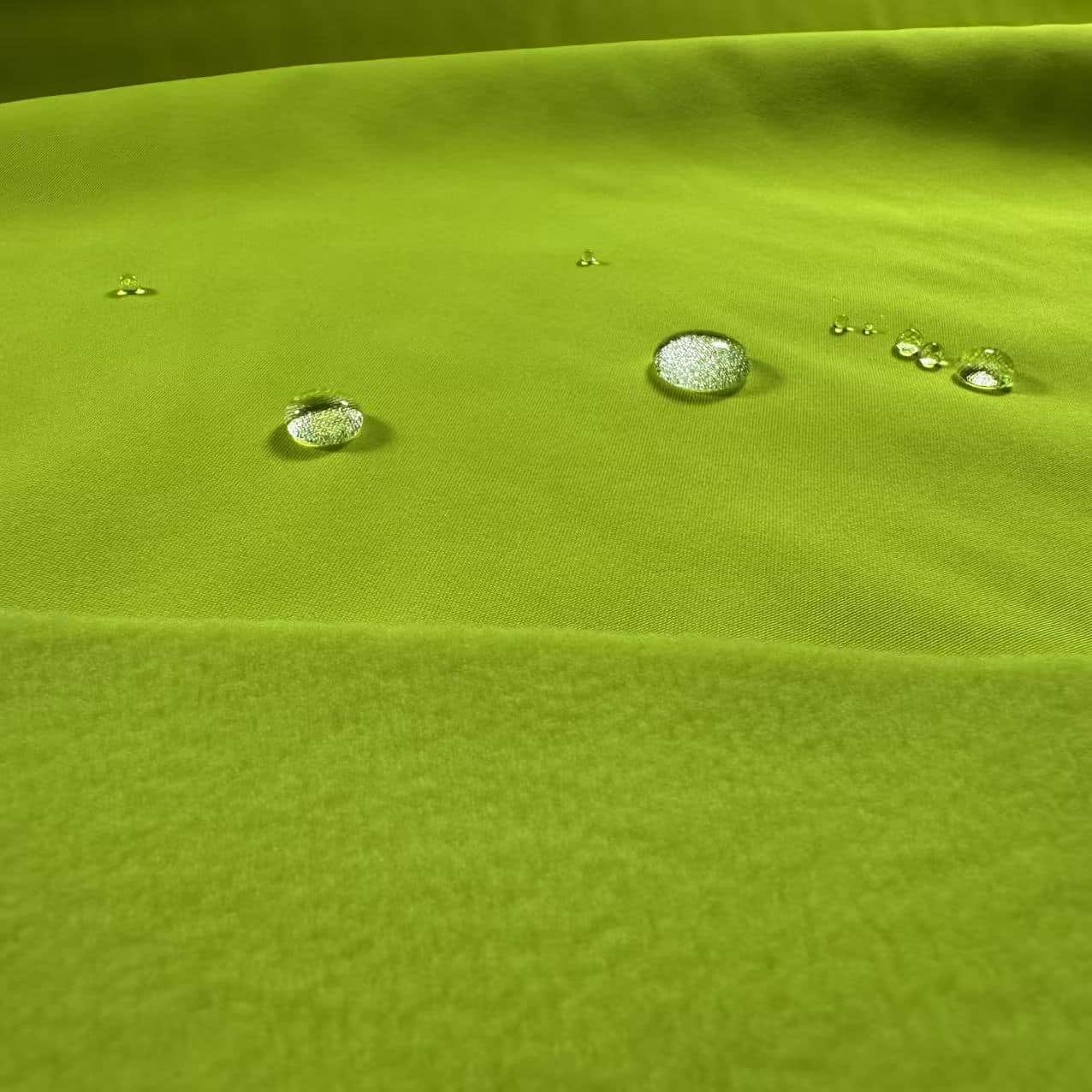
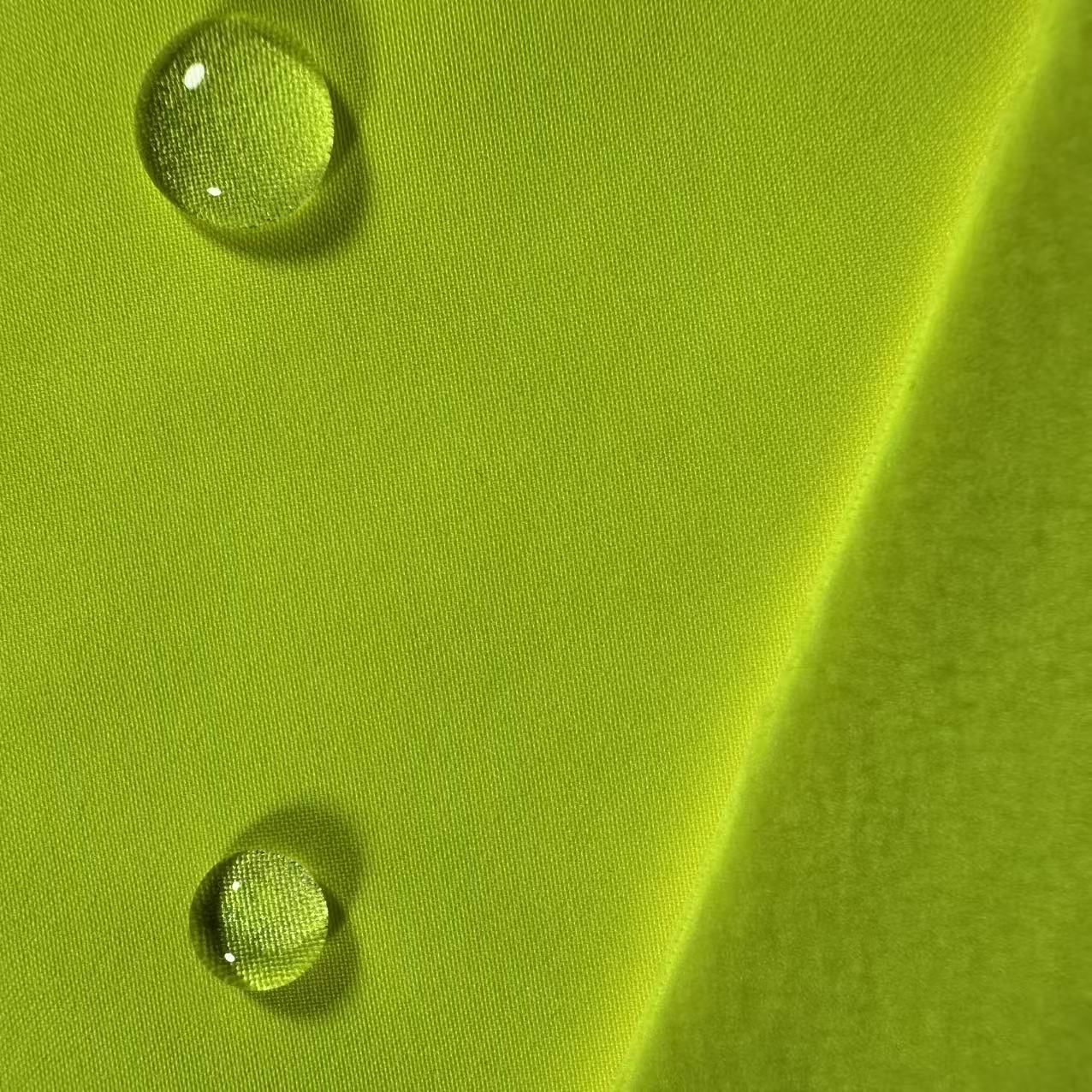
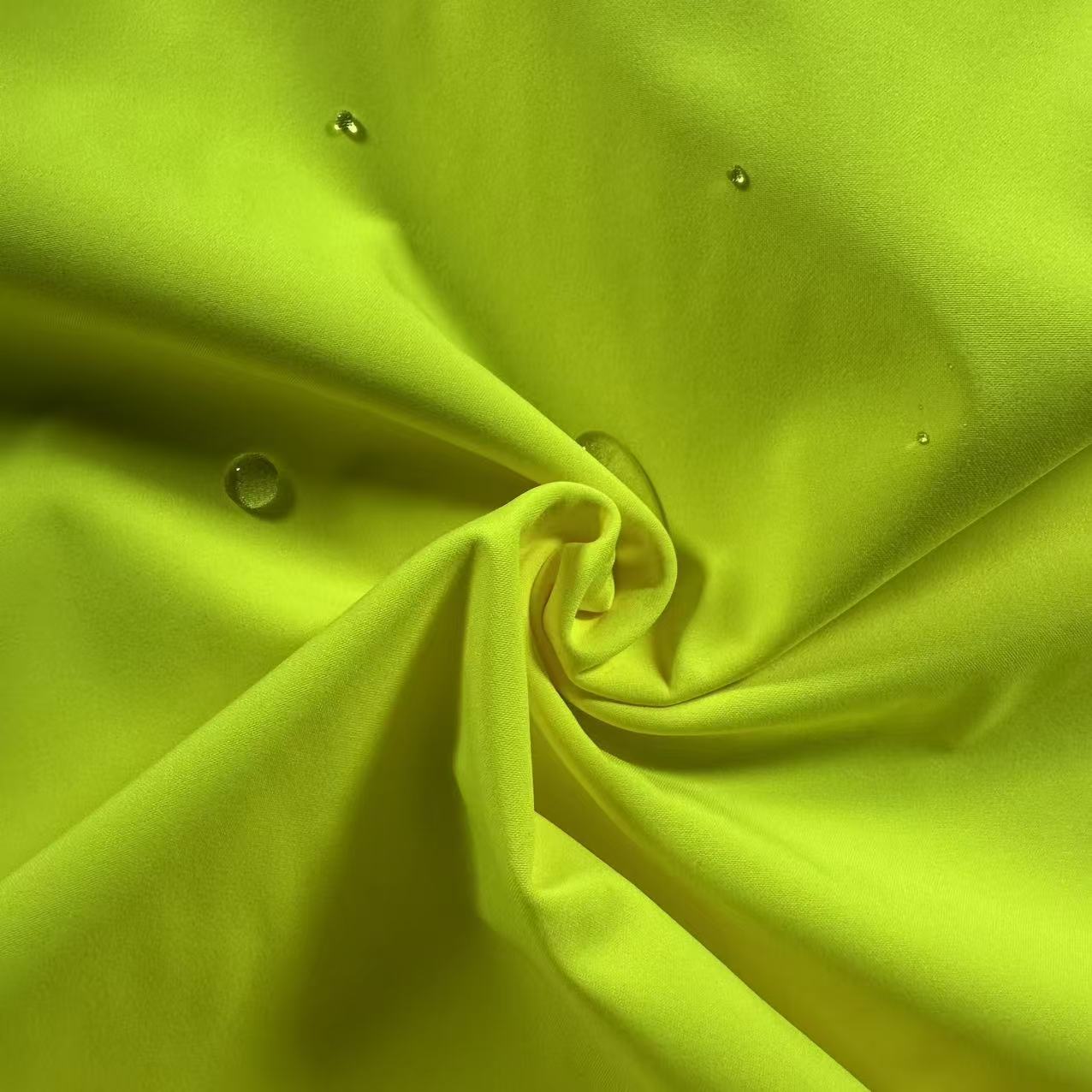
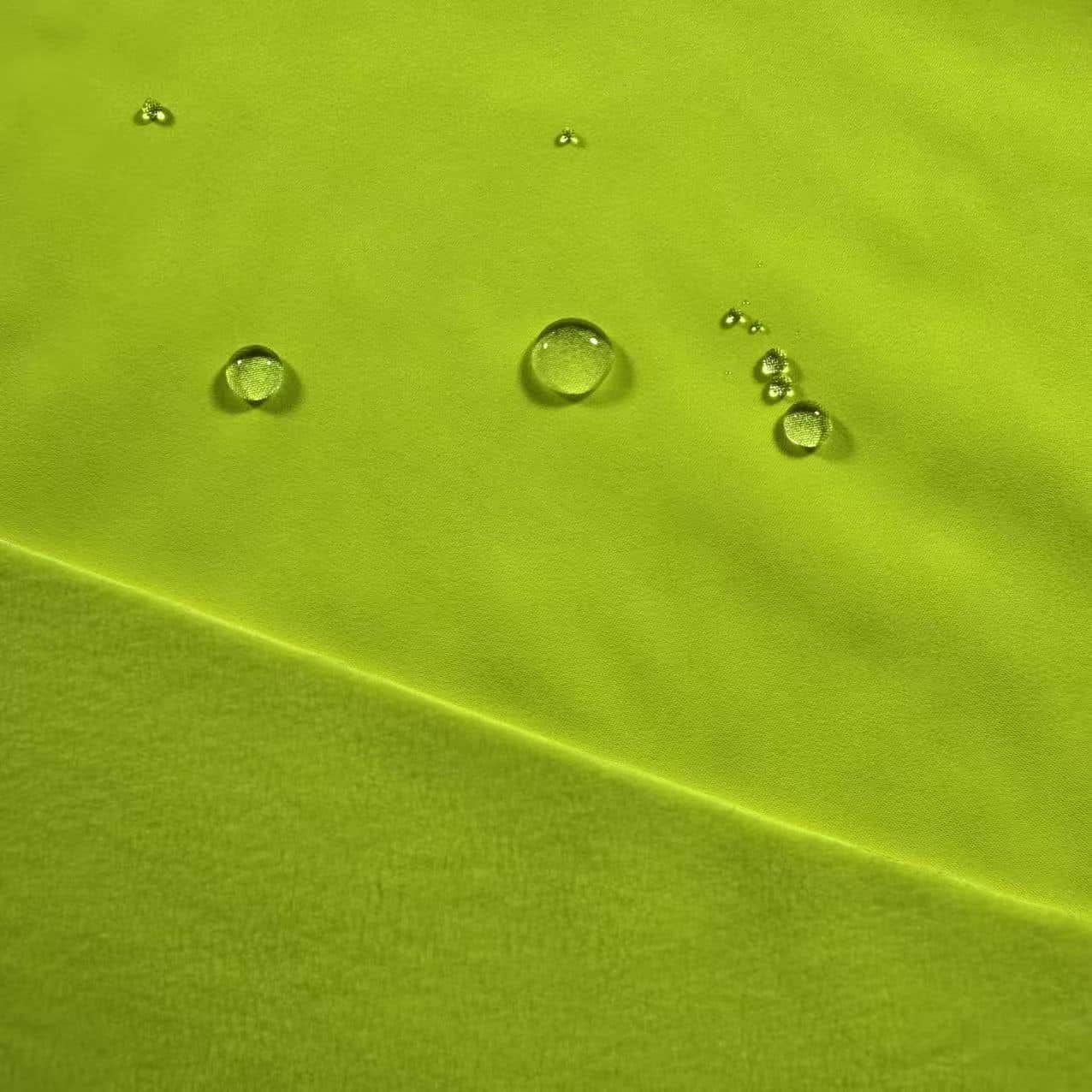
Hi-Vis Yellow 3-Layer Softshell Fabric Waterproof & Breathable – Reflective Safety Workwear Fabric (EN20471/EN343)
Hi-Vis Yellow 3-Layer Softshell Fabric is a premium, production-ready laminated softshell engineered for safety workwear brands and OEM garment factories that need a strong balance of high-visibility color performance, weather protection, and all-day comfort. The 3-layer construction typically combines a water-repellent outer face, a windproof waterproof/breathable membrane, and a soft inner fleece for warmth and wearer comfort.
This fabric is designed for garments that are developed to meet EN ISO 20471 high-visibility and EN 343 rain protection requirements. EN ISO 20471 focuses on fluorescent background material plus retroreflective elements and their placement, while EN 343 covers protection against rain and includes performance classes for water penetration resistance and breathability marking.
InquiryImportant note for compliance: fabric performance supports your certification pathway, but final EN ISO 20471 / EN 343 compliance depends on the complete garment design (pattern, reflective tape layout, seams, closures) and accredited testing of the final product.
- Description
Product Introduction
Safety teams and industrial workers don’t get to choose the weather. They work in rain, wind, cold mornings, and high-traffic environments where visibility is non-negotiable. A standard “hi-vis fabric” is not enough—premium B2B buyers want a softshell that stays comfortable during movement, maintains a professional appearance, and supports a compliance workflow for hi-vis and foul-weather protection.
Our Hi-Vis Yellow 3-Layer Softshell Fabric is built for those demands. The outer layer provides a durable face for daily abrasion and frequent wear; the middle membrane supports windproof protection and water resistance while allowing moisture management; the inner fleece improves comfort and warmth for active outdoor work.
This construction is widely specified for reflective safety workwear such as jackets, parkas, softshell trousers, and utility outerwear where customers want a “wear-it-all-day” feel—without the plastic handfeel of heavy coated rain fabrics.
Why B2B Brands Choose 3-Layer Hi-Vis Softshell
1) Real comfort for real shifts
Softshell is chosen when the wearer needs mobility, stretch-friendly performance (depending on your chosen face fabric), and a warmer feel than single-layer shells. The fleece backing reduces chill and feels comfortable against inner layers during long shifts.
2) Weather protection without excessive stiffness
A 3-layer system gives you the protection benefits of a membrane construction while keeping the garment more “work-friendly” than rigid rainwear materials—especially for crews who climb, lift, and move constantly.
3) Premium appearance that sells to procurement teams
Hi-vis programs often become long-term contract SKUs. Buyers value fabrics that look consistent across reorders, are easy to brand (prints/labels), and hold shape after repeated use.
Standards & Buyer Notes (EN ISO 20471 / EN 343)
EN ISO 20471 – High-visibility clothing
EN ISO 20471 sets requirements around fluorescent background material and retroreflective elements and how they are arranged to ensure visibility from multiple angles.
Fabric takeaway: your hi-vis yellow face fabric is the “background material” component; your garment must also use the correct reflective tape layout to achieve the desired class.
EN 343 – Protection against rain
EN 343 focuses on resistance to water penetration and water vapour resistance / breathability, and garments are marked with performance classes (often shown as two numbers).
Fabric takeaway: waterproof/breathable data supports your garment design, but the final rating depends heavily on seams, zippers, and construction.
Typical Construction (3-Layer Softshell)
A standard high-performance 3-layer softshell is structured as:
-
Outer face: hi-vis woven/knit with water-repellent finish (helps rain bead and reduces wet-out)
-
Middle layer: waterproof/breathable membrane (windproof barrier + moisture management)
-
Inner layer: soft fleece backing for comfort and warmth
Optional program upgrades (available on request):
-
Stronger DWR for harsher rain environments
-
Higher waterproof rating membrane selection
-
Higher breathability target selection
-
Enhanced abrasion face for heavy-duty workwear
-
FR / anti-static / anti-mildew options (project-dependent)
Key Specification Options
Because different markets target different EN 343 performance classes and different wear conditions, we supply this softshell as a configurable program. Typical buyer-selectable options include:
-
Color: Hi-Vis Yellow (shade matched to your compliance/brand reference)
-
Structure: 3-layer (face + membrane + fleece)
-
Waterproofness: 10,000 mm
-
Breathability: Ret 10-15 customized.
-
Handfeel: softer garment drape vs more structured outer shell feel
-
Width / weight: 300 gsm/150 cm
-
Reflective tape compatibility: designed for industrial garment manufacturing workflows
If you share your target EN 343 marking requirement and your expected working environment (light rain vs driving rain, high activity vs low activity), we’ll recommend the most suitable configuration.
Applications
This fabric is commonly specified for:
-
Hi-vis softshell jackets & parkas (construction/roadwork/utility crews)
-
Softshell trousers and outdoor work pants
-
Reflective safety outerwear systems (paired with certified reflective tapes)
-
Logistics, warehouse, rail/road maintenance outer layers (project-dependent)
-
Cold-weather high-visibility uniforms where comfort matters
Customization for Brand Programs
Premium B2B buyers rarely want “one standard only.” Typical OEM requests:
-
Lab dips & shade control for Hi-Vis Yellow (tolerance agreement for reorders)
-
Membrane selection by performance tier (waterproofness/breathability balance)
-
Face fabric selection (abrasion resistance vs softer drape)
-
Fleece backing feel (standard fleece vs microfleece)
-
Roll packing & labeling (lot traceability, barcodes, carton marks)
Quality & Testing Support
To reduce risk before bulk orders, most brands validate:
-
Fabric waterproof and breathability testing (by your method: ISO 811 / RET / MVTR routes depending on your standard workflow)
-
Color and brightness consistency across lots
-
Tape & seam behavior on real production lines (needle choice, stitch density, seam tape if applicable)
-
Field-use checks (abrasion zones, flex cracking risk, cleaning/maintenance impact)
We can support a procurement-friendly spec sheet and sample yardage so your factory can run a real line trial before confirmation.
Ordering Guide
To quote accurately and speed up sampling, please send:
-
Target end-use (jacket / trousers / parka / panels)
-
Target standards: EN ISO 20471 class requirement + EN 343 performance expectation
-
Preferred waterproof/breathability tier (or your benchmark fabric data)
-
Quantity per color + delivery window
-
Destination and packaging requirements
-
Any special requirements (stretch, FR, anti-static, printability)
Call to Action – Get Samples & a Detailed Offer
If you’re building a Hi-Vis Yellow softshell workwear line and need a reliable supplier for 3-layer waterproof & breathable fabric that supports EN ISO 20471 / EN 343 garment development, send your requirements and we’ll reply with a tailored offer and sampling plan.
Contact Us for a Detailed Offer:
Company: Lean Textile Co., Ltd.
Email: [email protected]
WhatsApp / WeChat: 008615051486055
FAQ
1) Is this fabric certified to EN ISO 20471 and EN 343 by itself?
The standards apply to the finished garment system. EN ISO 20471 requires fluorescent background plus reflective elements and placement; EN 343 evaluates rain protection and breathability classes.
2) What makes a 3-layer softshell different from coated rain fabric?
A 3-layer softshell uses an outer face + membrane + fleece for comfort and weather protection, typically with better “wearability” than stiff coated materials.
3) How waterproof is it?
10,000 mm
4) How breathable is it?
Ret 10-15 customized
5) Can you match our Hi-Vis Yellow shade?
Yes. Provide Pantone/reference swatch and your tolerance requirement, and we’ll develop lab dips for approval.
6) Will reflective tape adhere well?
We design the program to be compatible with industrial garment manufacturing. Final performance depends on tape type and heat-press settings—so we recommend a small trial during sampling.
7) Is it suitable for heavy abrasion environments?
Yes, with the right face fabric selection. Share your use case (tools, harness contact, frequent kneeling) and we’ll recommend a stronger face option.
8) What’s the typical MOQ and lead time?
MOQ/lead time depends on your chosen configuration and color approval. Send your order plan and destination so we can quote precisely.
9) Can you provide test reports?
We can support documentation for your sourcing workflow and coordinate third-party testing when required (based on your target standards and final construction).
10) What do you need to start sampling?
Your target standards, performance expectations (waterproof/breathability), color reference, and intended garment type.
Bonded Fabric, Softshell Fabric
SEND INQUIRY
Related Products


Copyright © 2026 Lean Textile Co., Limited All rights reserved