


Polyester 300D Oxford Hi-Vis Yellow Waterproof Fabric – PU Milky | EN20471 / EN343
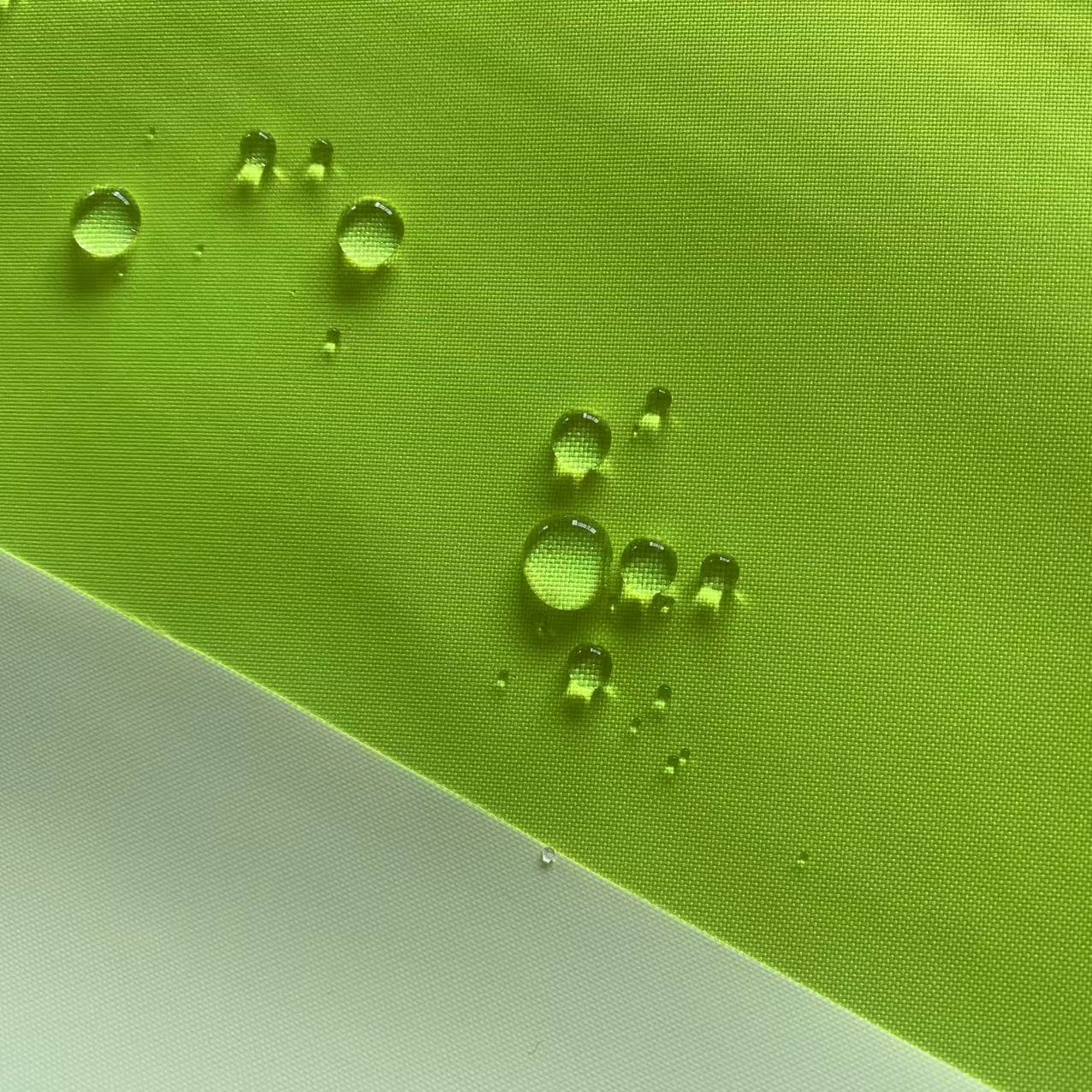
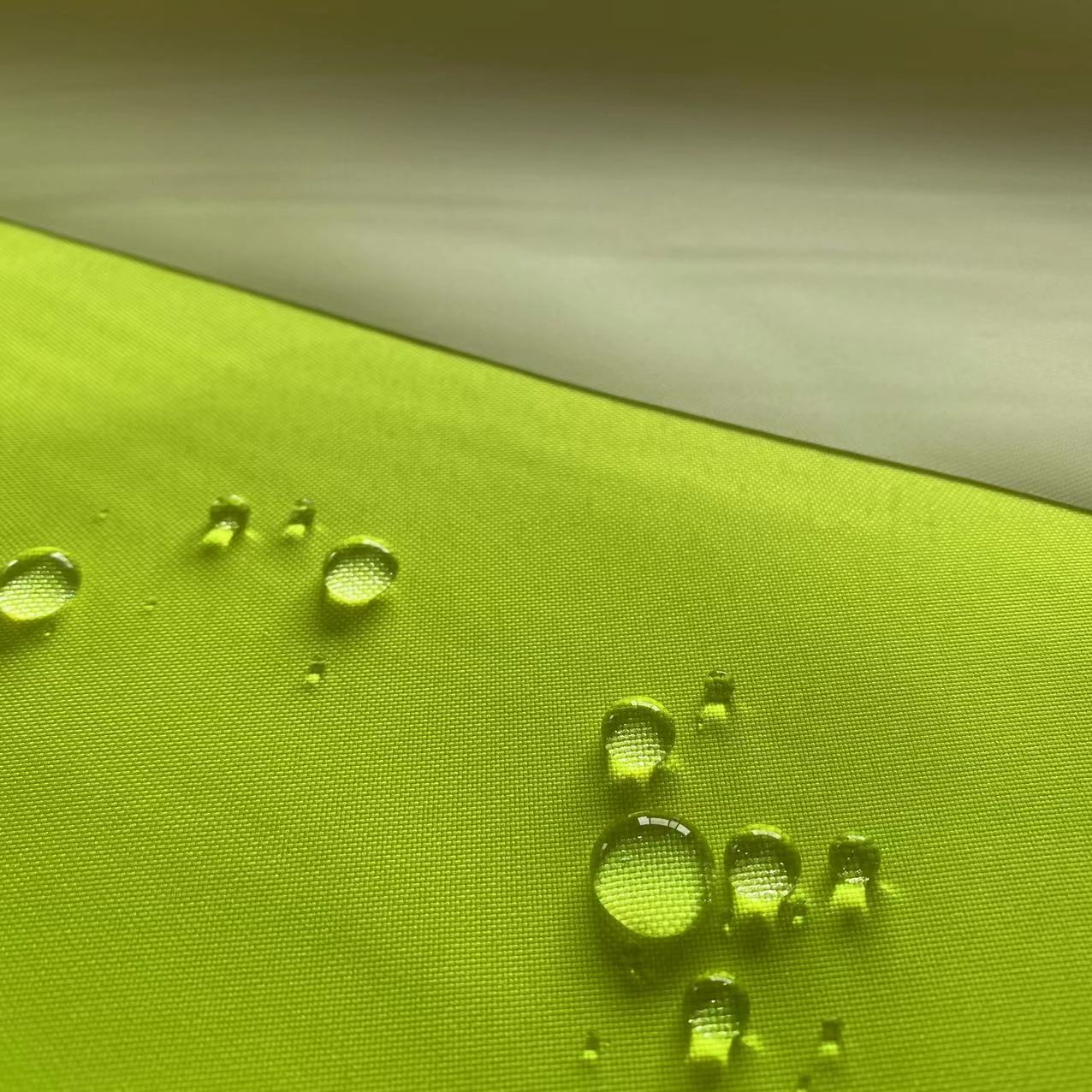
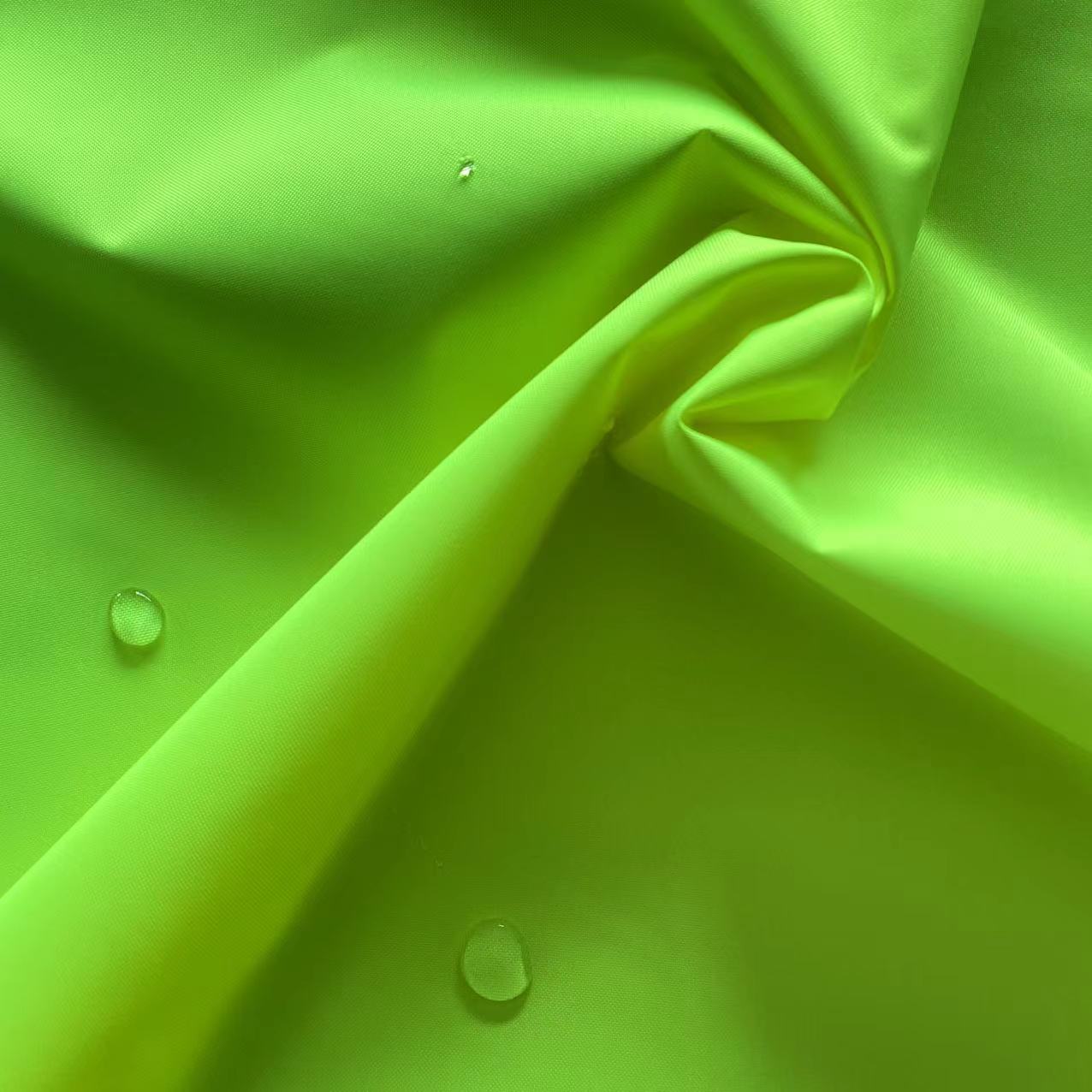
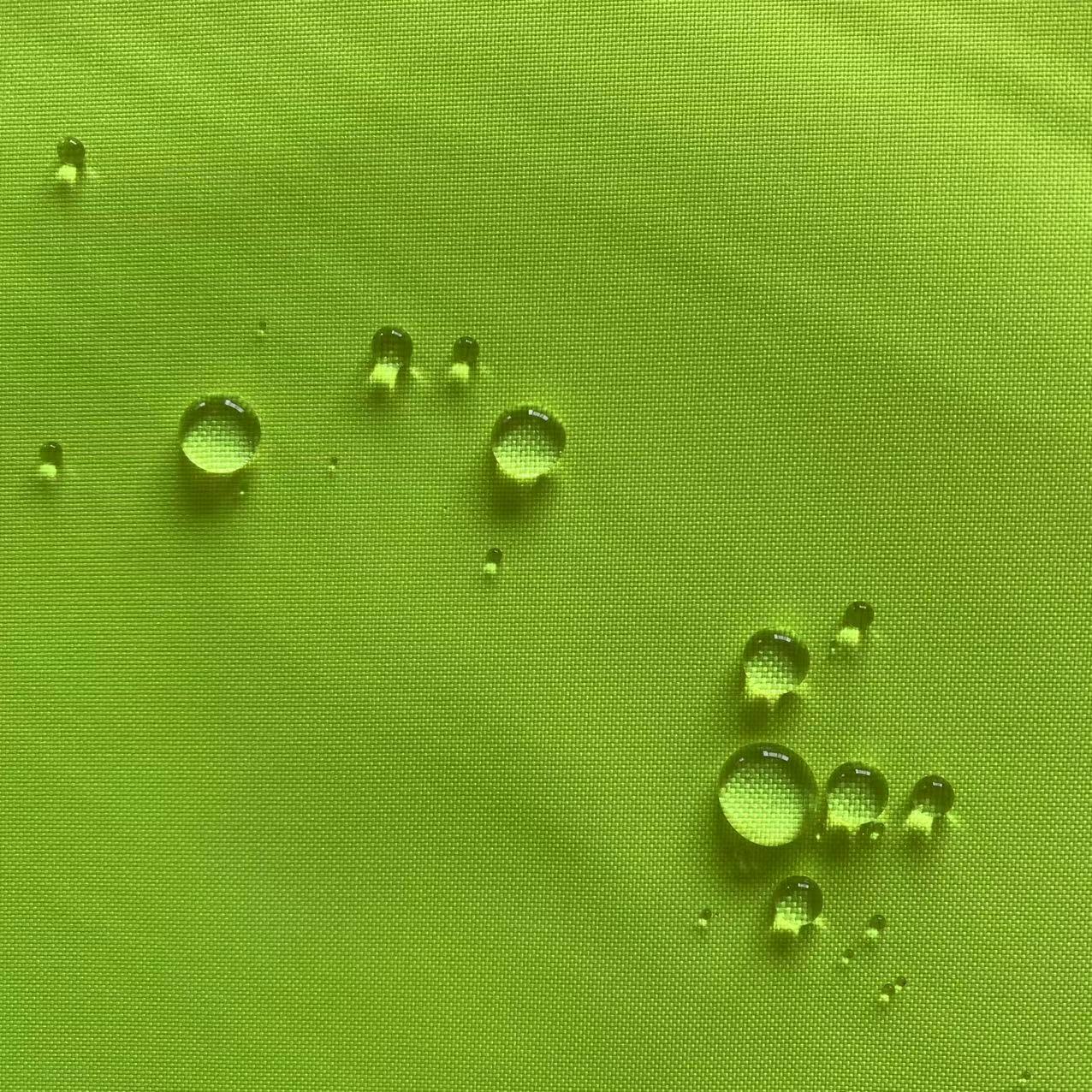
If you manufacture high-visibility PPE, safety workwear, or rainwear, you need an outer fabric that stays bright, durable, and water-resistant in real jobsite conditions. This 100% polyester 300D*300D Oxford in hi-vis fluorescent yellow is engineered for visibility-focused garments and foul-weather protection layers, featuring a PU milky (white) coating and 3000mm-10,000 mm hydrostatic head performance.
This fabric is a practical choice for B2B buyers who want:
-
stable Oxford construction for consistent cutting/sewing
-
waterproof PU coating for reliable rain protection
-
hi-vis fluorescent background material parameters (chromaticity & luminance factor) to support EN ISO 20471-oriented programs
InquiryNote: EN ISO 20471 and EN 343 are primarily garment standards. Fabric data helps your certification process, but final compliance depends on the finished garment design, reflective tape, seam sealing, and testing.
- Description
Key Features
1) High-visibility fluorescent yellow (daytime conspicuity)
Fluorescent background material is a core requirement in high-visibility clothing systems, typically in yellow / orange-red / red for strong daytime visibility.
We can provide background material data such as:
-
Chromaticity & luminance factor: β 1.09, x 0.39, y 0.52
These values are useful when your team is preparing samples and documentation for hi-vis garment development and third-party tests.
2) Waterproof protection with PU milky coating
The back side uses PU milky coating and reaches 3000mm water pressure (hydrostatic head).
Milky PU coating is often chosen when buyers want:
-
a cleaner, more uniform back appearance
-
improved coverage (less “see-through”)
-
a stable base for garment processing and potential lamination programs
3) Outdoor durability for workwear use
-
Colorfastness to light: Grade 4 (helps maintain hi-vis appearance under sunlight exposure).
-
Oxford weave gives a balanced combination of tear resistance and stiffness for structured PPE shells.
4) Production-friendly, scalable supply
-
Roll packing and labeling can follow your requirement.
-
Typical production lead time: 10–15 days after sample confirmation (project-dependent).
Specifications (Standard Offering)
-
Material: 100% Polyester
-
Yarn Count: 300D*300D
-
Construction/Density: 23×19
-
Weight: 180 gsm
-
Width: 150 cm
-
Finishing: Waterproof, 3000mm water pressure, PU milky coating
-
Recommended Uses: Workwear, PPE, Rainwear, etc.
Standards Reference: EN ISO 20471 (High Visibility) – What It Means for Fabric
EN ISO 20471 is the widely used standard for high-visibility clothing designed to visually signal the wearer in daylight and when illuminated in the dark (typically via reflective tape).
For the fluorescent background material, the standard framework includes checks such as:
-
chromaticity coordinates and luminance factor
-
durability after conditioning (e.g., UV exposure and washing), depending on the program
That’s why providing chromaticity & luminance (like β, x, y) is valuable early in development: it helps you screen materials before committing to full garment sampling and testing.
Standards Reference: EN 343 (Protection Against Rain) – How Performance Is Classified
EN 343 addresses protective clothing against rain/bad weather and considers water penetration resistance and water vapour resistance (breathability) at garment level (including seams).
Many EN 343 markings use an “X,Y,(optional)” style, where:
-
X = resistance to water penetration (often shown as classes)
-
Y = water vapour resistance (breathability classes)
-
some systems include additional optional tests/markings
Different sources describe class systems slightly differently depending on edition and interpretation; a common approach is class-based reporting for water penetration and vapour resistance.
Practical takeaway for buyers: fabric hydrostatic head like 3000mm helps with rain protection, but garment seams and seam sealing are often the deciding factor in EN 343 outcomes.
Typical Applications
This fabric is widely used for:
-
Hi-vis rain jackets / rain trousers
-
Road maintenance, construction, airport ground crew outer shells
-
Logistics, port, warehouse safety outerwear
-
PPE outer layers combined with reflective tapes and seam sealing
Customization Options (OEM-Friendly)
If you’re building a program for tenders or uniform projects, we can support:
-
handfeel (more matte / stiffer / softer)
-
coating recipe adjustments (higher hydrostatic head options)
-
width/weight adjustments for specific garment patterns
-
color matching by Pantone or physical swatch (hi-vis shade control)
-
additional finishes (anti-static, FR, oil/water repellency) upon evaluation
Packaging & Lead Time
-
Packing: by roll, or as required (labels, barcodes, shade lots)
-
Production: typically 10–15 days after sample approval
-
Sampling: swatches / A4 / meterage sampling available for approval and testing
Call to Action (Get Quote / Sample / TDS)
Contact Us for a Detailed Offer:
Company: Lean Textile Co., Ltd.
Website: https://www.technical-fabrics.com/
Email: [email protected]
WhatsApp / WeChat: 008615051486055
FAQ
Q1: Is this fabric “EN ISO 20471 certified”?
EN ISO 20471 is mainly a garment standard. Fabric data (chromaticity, luminance, durability) helps your process, but certification depends on the finished garment, reflective tape, design coverage, and testing.
Q2: What does “PU milky coating” mean?
It’s a white/milky PU layer on the back side. It provides waterproof performance and a cleaner, more uniform back appearance—often preferred for rainwear and PPE shells.
Q3: Is 3000mm hydrostatic head enough for rainwear?
It’s a common, practical level for general rain protection. For heavy-duty prolonged exposure or high-pressure contact points, you may want higher hydrostatic head or a membrane-laminated construction.
Q4: Can this fabric be seam-sealed / tape-sealed?
Yes, PU-coated shells are often used with seam tape systems. Your tape and machine settings should match the coating type and garment structure.
Q5: Do you provide testing support?
We can provide key fabric data (e.g., hydrostatic head, chromaticity/luminance information when available) and assist with sampling for your third-party testing workflow.
Q6: What’s the MOQ and lead time?
Lead time is typically 10–15 days after sample confirmation; MOQ depends on color and coating requirements—send your target quantity and specs for an accurate quote.
Oxford Fabric, Coated Fabric
SEND INQUIRY
Related Products


Copyright © 2026 Lean Textile Co., Limited All rights reserved